
Merge Solitaire: merging cards, words and a daily puzzle
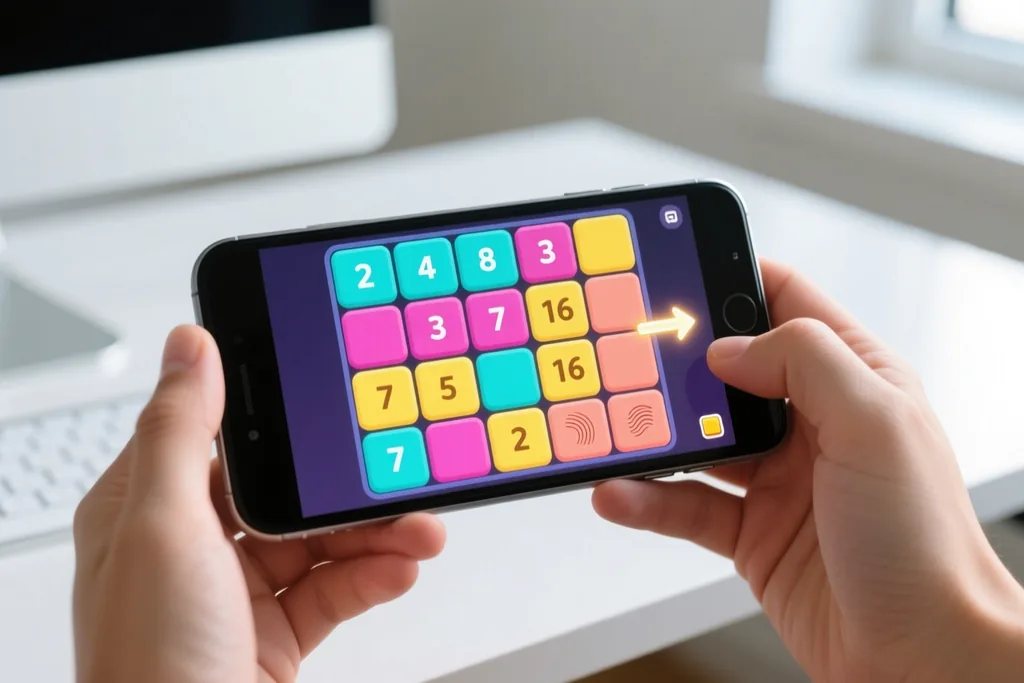
Merge Solitaire began with a simple question. Two of the most popular casual pastimes, number merging and word puzzles, are built on the same instinct: both reward the moment when two pieces suddenly fit. So we asked what would happen if a daily session asked the player to do both, without either one feeling bolted on. The answer is a game we still enjoy testing.
Where the two loops meet
Merging is about patience and pattern: you combine small things to make bigger things, and the board slowly tells you whether you were right. A word puzzle is about recall and the quiet pleasure of a word clicking into place. Both loops ask the player to hold a small set of possibilities in mind at once.
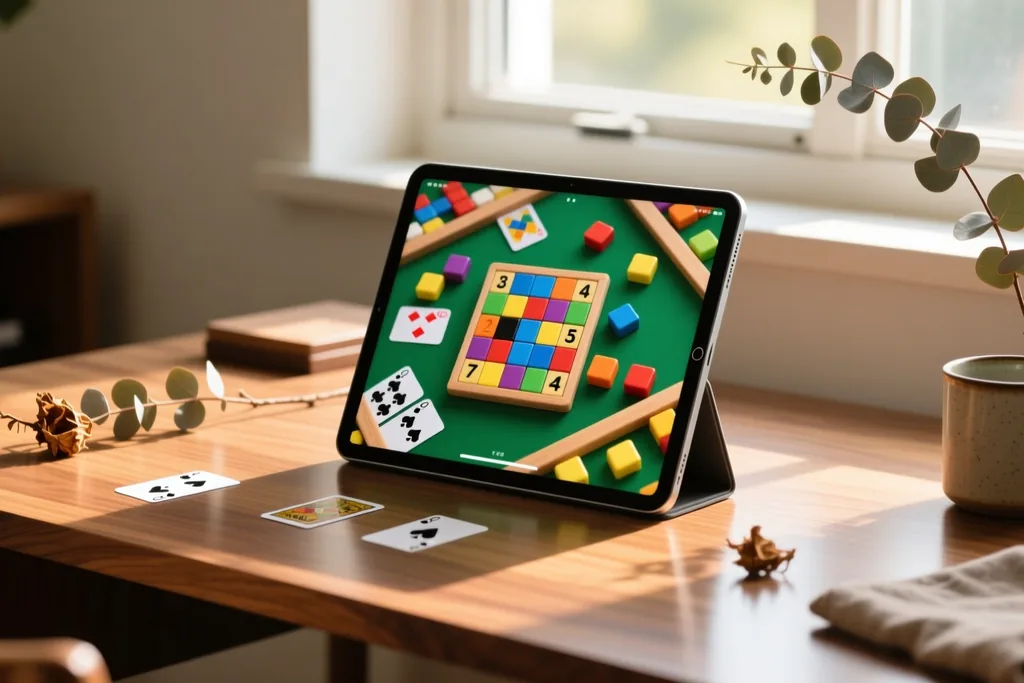
That shared demand is what makes them fit. A merge becomes a clue, and a solved word unlocks the next merge. Instead of two games sharing a menu, the player gets one rhythm with two textures, and the transition between them never feels like a change of task.
Designing the daily loop
A daily puzzle lives or dies on how it is framed. If the reward is too thin, players stop returning; if the streak is too punishing, a single missed day ends the habit entirely. We tried to find the middle: a fresh board each day, a clear finish, and no guilt for people who skip.
The daily is deliberately short. It gives the player a reason to open the app tomorrow that has nothing to do with spending anything, and it gives us a natural place to introduce ideas slowly rather than all at once.
Building a fair puzzle
A puzzle feels fair when the player can see that the solution was reachable, even after failing. That means the board must never depend on a blind guess, and a stuck state must always be readable as the player's own decision rather than the game's trick.
- Every daily board is checked so a solution exists from the start.
- Dead ends are visible early rather than revealed at the last move.
- The hint system explains the principle behind a move, not just the move.
- No purchases are needed to finish any daily puzzle.
Making these promises public was uncomfortable at first, because it limits what we can ship. It also removed an entire class of complaints, because players can tell the difference between a hard puzzle and an unfair one, and they forgive the first.
Two systems, one balance
The table below shows how the two halves of the game support each other, and what each one contributes to the daily session. The point is not that either loop could not stand alone, but that together they give the session a shape that neither reaches by itself.
| System | What the player does | What it adds to the day |
|---|---|---|
| Merge board | Combines pieces into larger ones | A calm, patient rhythm |
| Word puzzle | Recalls and places words | A short, sharp spark |
| Daily set | Plays one fresh session | A reason to return |
| Hints | Asks for guidance | Progress without frustration |
Testing the fit, not just the fun
Early testers told us the merge board was pleasant and the word puzzle was clever, which was not the feedback we needed. The real question was whether the seam between them disappeared, so we changed what we watched for: not smiles, but hesitation at the moment of switching.
When players stopped noticing the change of task, the design was working. That taught us to test the joins between systems, not only the systems themselves, a lesson that now runs through our audit work.
Word lists and honest difficulty
The word puzzle half of the game depends entirely on the quality of its word list. A list that is too generous makes the puzzle trivial, and a list that includes obscure or disputed words makes it feel rigged against a fair player. We build the list by hand, favour common words, and check every entry against a plain dictionary before it can appear.
Difficulty comes from how the words fit together, not from how rare they are. A board of everyday words that can be combined in only a few ways is far more satisfying than one salted with words nobody uses. This is slower to build than scraping a list from somewhere, and it is the reason the daily puzzle usually feels solvable rather than lucky.
Why a daily habit is worth the work
A daily loop is one of the few honest reasons a casual player returns that does not depend on spending or pressure. It respects the calendar rather than the wallet. If Merge Solitaire does one thing well, we hope it is this: it gives people a small, fair appointment with their own attention, once a day, and asks nothing more than that.
Read next
Solitaire Grove: a calm take on classic solitaire
Our cosy card game, the design choices behind it and what a relaxed pace asks of the player.
Flop Ball Jump: an arcade homage with modern timing
A small ball, a tall tower and the arcade heritage we borrowed from on purpose.
Memory Solitaire: training recall one match at a time
A memory matching game for short sessions and what makes recall puzzles fair and fun.