
Memory Solitaire: training recall one match at a time
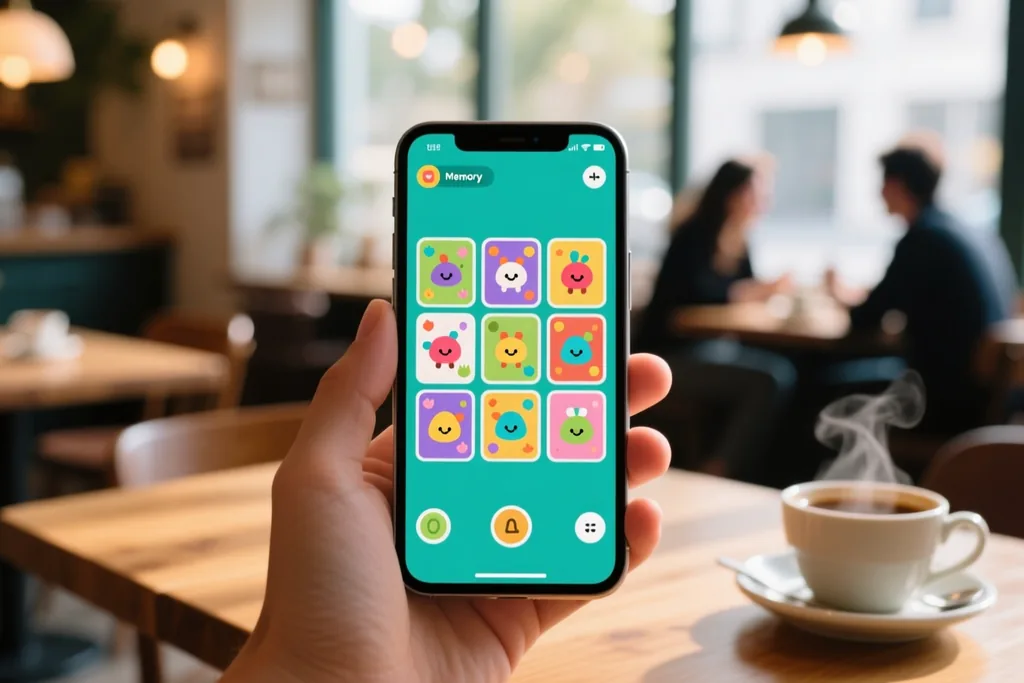
Memory Solitaire is a matching game built for the way people actually hold a phone: in short, snatched moments rather than long evenings. It takes the oldest memory exercise there is, a spread of face-down cards, and asks how much of it can be made fair without becoming soft. Recall is the whole game, and our job was to make that demand feel welcome rather than testing.
The shape of a fair recall puzzle
Memory games have one quiet enemy: chance. If a board can be beaten by guessing at random, the player's skill stops mattering, and the win feels hollow. If it cannot be approached without a perfect mind, the game stops being a game and becomes an exam.
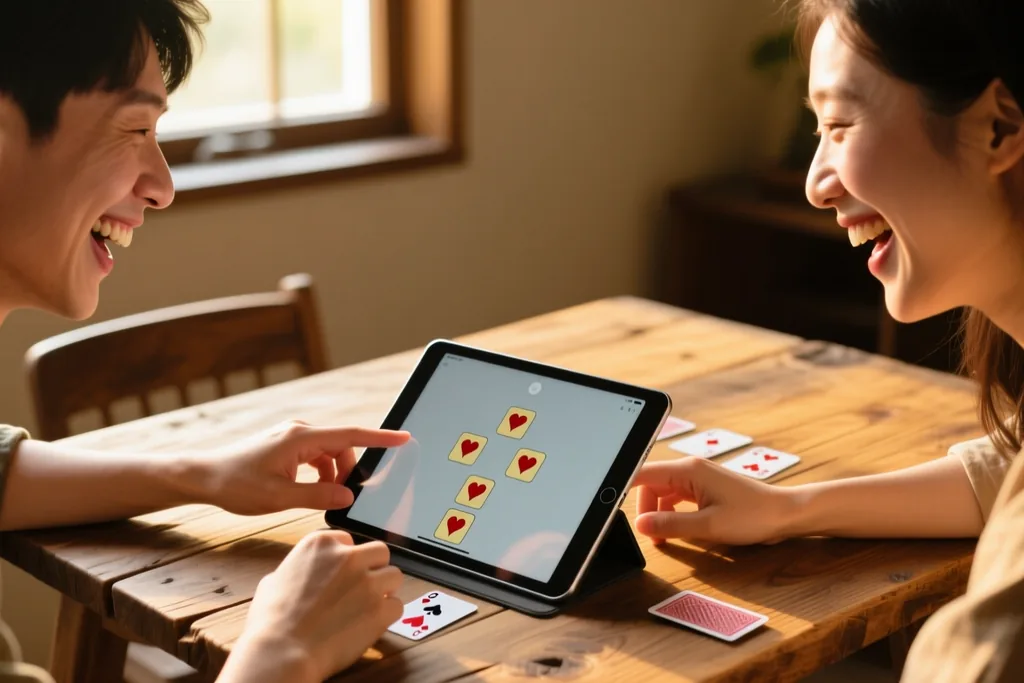
We aimed between those poles. Every board is solvable with attention, most boards reward a calm second look, and none of them require natural talent that cannot be built. The puzzle should measure the player's care, not their ceiling.
Designed for short sessions
A memory board can be played in two minutes, which makes it perfect for the gaps in a day. That fact shaped the design more than any puzzle idea. There is no need to remember where you were, because a session is short enough to hold in your head from start to finish.
Because nothing carries over between sessions, the player never feels punished for leaving. A board can be closed mid-play and the worst case is losing one small attempt, which is an entirely reasonable thing to lose.
Keeping recall honest
Recall games are easy to spoil, so we set rules for ourselves about what we would never add. Anything that turns attention into a purchase or a grind would hollow out the one skill the game is about.
- No hints that reveal a pair outright without a cost in time.
- No time pressure that punishes slower, more careful players.
- No difficulty that depends on a random shuffle going against you.
- No streaks or currencies that make a missed day feel costly.
These limits keep the game about the player's eye and nothing else. They also mean the game cannot be stretched forever, which we consider a feature: a small, honest thing done well beats a large one padded out.
What the board asks of the player
The table below describes the small set of skills a good memory board draws on, and how the design supports each one. None of them are exotic, and all of them are useful far outside a game, which is part of why the genre has lasted so long.
| Skill | How it is used | How the game supports it |
|---|---|---|
| Attention | Noticing a card as it is turned | Clear, unhurried reveals |
| Association | Linking a position to a picture | Distinct, easy-to-tell artwork |
| Patience | Resisting a random guess | No timer pushing a decision |
| Recovery | Rebuilding after a wrong match | A forgiving board size |
Gentle difficulty, no tricks
Difficulty in a memory game should come from the board getting larger and the pictures getting subtler, not from the game hiding things or rushing the player. We keep the curve steady and visible, so a player always knows why a round was harder than the last one.
We also avoid the temptation to punish. A wrong match costs a turn and nothing else; there is no penalty that follows a player from board to board. Memory is hard enough on its own without the game adding pressure to the failure.
Artwork that supports recall
In a memory game the pictures are not decoration; they are the puzzle. If two cards look similar in shape or colour, the board becomes a test of eyesight rather than of memory, and that is a different game entirely. So we designed the card faces to be distinct at a glance, using clear silhouettes and separated tones.
We also avoided busy illustrations that pull the eye to a detail instead of the whole image. A card should be recognisable in a fraction of a second from across the board, because that is exactly how a real player will recall it. This is a small, unglamorous part of the work, and it is the difference between a fair board and a frustrating one.
We test the artwork by flipping a board quickly and asking a player to name a card they saw only once. If they hesitate between two similar pictures, the art has failed even though it looks fine. Judging a memory game by how it feels in a fast flip is a habit that transfers to almost every interface we build.
Why we built a quiet training game
Not every game needs to be loud, and not every session needs a reward at the end. Memory Solitaire is the title we reach for when we want to remember why we make games at all: to give someone a small, honest challenge in the middle of a busy day. It trains nothing except attention, and attention is enough.
Read next
Solitaire Grove: a calm take on classic solitaire
Our cosy card game, the design choices behind it and what a relaxed pace asks of the player.
Merge Solitaire: merging cards, words and a daily puzzle
How we blend number merging with a word puzzle and why a daily loop keeps players coming back.
Flop Ball Jump: an arcade homage with modern timing
A small ball, a tall tower and the arcade heritage we borrowed from on purpose.