
Monetisation strategy for free-to-play games
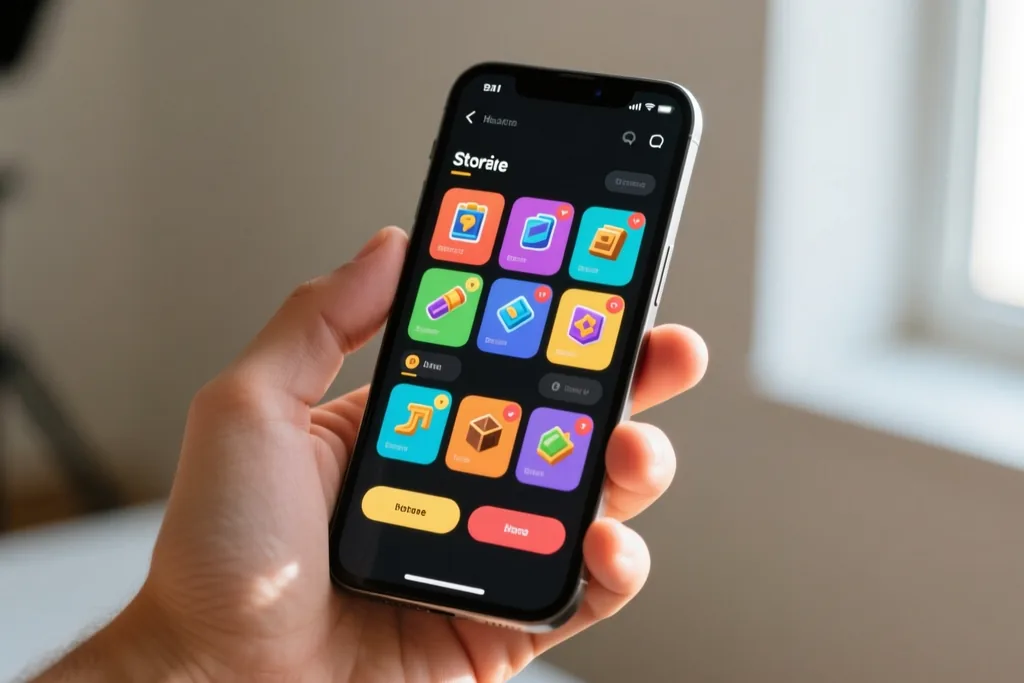
Monetisation is the part of free-to-play design that decides how a game earns its keep without losing the players it needs. Done well, it is almost invisible: players who want more are offered more, and the path through the game is never blocked behind a wall. Done badly, it turns every session into a negotiation and the game stops being a game. Our approach is to design the loop first and let the earning follow.
Start from the loop, not the price
The order of work decides the outcome. A team that begins with a price list will bolt offers onto a loop that was never designed to carry them, and the seams show. We begin by understanding what the player does, what they want next, and where their patience naturally bends, and only then ask whether anything should be sold at that point.

This is slower at the start and far faster later, because an offer that fits the loop needs almost no promotion to feel fair. Players recognise a well-placed option the way they recognise a well-placed shortcut, and they do not resent it.
Offers that respect the player
An offer respects the player when it is clear, optional and proportionate. Clear means the player understands what they are buying and what it does. Optional means the game can be finished and enjoyed without it. Proportionate means the value on offer matches the moment it appears, so a small need is met with a small price.
We are wary of anything that works only because the player is frustrated or stuck. A purchase made in annoyance is a purchase made once, and the player who made it usually leaves with a sour memory of the game and the studio. That is a poor trade at any price, however good the short-term numbers look.
The options available
Free-to-play titles draw on a small family of revenue models, each with its own effect on how the game feels. The table below is how we weigh them against a game's loop and audience before recommending any of them.
| Model | How it works | What it asks of the game |
|---|---|---|
| Cosmetic purchases | Sell appearance, not progress | A social or personal angle |
| Convenience unlocks | Remove friction once, fairly | Honest friction to begin with |
| Optional ads | Trade attention for a small gain | Respect for the player's time |
| Content packs | Add something new to play | A game worth extending |
Ads without losing the room
Advertising is a legitimate part of many casual games, and it becomes destructive the moment it interrupts the thing the player came for. The rule we follow is that an ad should never break a session in the middle; it should sit at a natural pause, be skippable where the platform allows, and never be the only way to progress.
- Never interrupt an active session with a forced ad.
- Prioritise the player's choice to watch something for a reward.
- Keep any reward the ad grants clearly stated in advance.
- Make the underlying loop pleasant enough to survive pausing.
A player who feels trapped by advertising stops trusting everything else in the game, including the parts they liked. Protecting that trust is worth more than the extra impression, every time.
Pricing and value that holds up
Pricing is a question of proportion rather than arithmetic. The cheapest item should feel like a small, easy decision and the largest should feel like a genuine commitment, with the steps between them making sense. When the spread is honest, players choose the level that suits them and rarely feel pushed toward either end.
We also look at what each purchase actually contains in terms of play. An item that gives an hour of something enjoyable is easy to price fairly; an item that merely removes a wait has to be judged against how annoying the wait was, and if the wait was designed to be annoying, we would rather remove it than sell it back.
Measuring without squeezing
Numbers tell us whether an offer is working, and they must be read carefully. A rising spend can hide a falling audience, and the two together are the thing that matters. We watch how the game feels to play at the same time as we watch what it earns, because a model that improves one at the cost of the other is borrowing from the future.
The most useful question is not how much a player spent but whether they came back afterwards feeling good about it. Answer that honestly and the rest of the model tends to fall into place, because a game that players trust is a game they are willing to support.
Monetisation as a consequence
We prefer to treat monetisation as a consequence of a good game rather than a goal set against it. Build a loop worth returning to, offer something honestly within it, and let the players who value it choose. That path earns less in a single week than aggressive pressure, and it earns a great deal more across the years a game could otherwise have.
Read next
Game audits: finding what holds your game back
What a Dytbaat audit covers, what we look at first and what you get back.
User acquisition: reaching the right players
Campaign structure, channel choices and how we keep spend honest.
Live-ops: running a game after launch
Content cadence, events and the operational habits that keep a live game healthy.