
Live-ops: running a game after launch

Live operations is the work of running a game after launch: keeping it healthy, giving players reasons to return and letting the game change in response to what they do. It is less glamorous than launch and far more consequential, because most of a game's life happens after the first release. This is how we approach a live game and the habits that keep one worth playing month after month.
What live operations actually covers
Live operations is a broad term that hides a lot of ordinary work. It includes the schedule of updates, the running of events, the monitoring of how the game behaves, the handling of problems, and the conversations with players. None of it is dramatic on its own, and together it is what turns a launch into a game with a future.
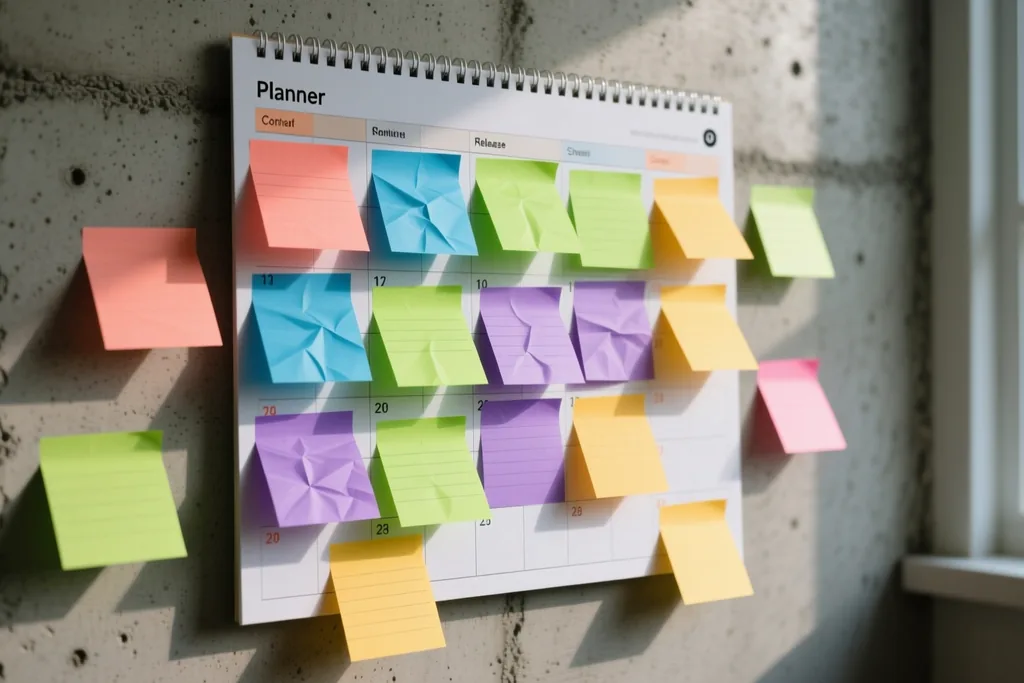
We think of it as custodianship rather than promotion. The job is to keep the thing running well and to make small, honest improvements, rather than to manufacture excitement a few times a year and let the game idle between.
Setting a content cadence
The most common failure in a live game is a cadence the team cannot sustain. A punishing schedule produces rushed, thin updates and exhausted developers, and players notice both. A cadence a small team can hold for a year beats an ambitious one that collapses in a quarter.
We work backwards from the team, not forwards from an ideal. If the studio can ship one solid update a month, the plan is built around that, and everything else is designed to fit inside it. Consistency, honestly kept, is what players learn to trust.
The pieces of a live calendar
A live game's activity usually falls into a few recurring shapes, each serving a different purpose. The table below is how we describe them and what each one is for, so that a calendar has a reason rather than a theme.
| Activity | Its purpose | How often |
|---|---|---|
| Content update | Adds something new to play | On a sustainable rhythm |
| Seasonal event | Gives a shared moment | Around real-world dates |
| Balance pass | Keeps difficulty honest | When the data asks for it |
| Maintenance | Keeps the game stable | Before problems grow |
| Community reply | Keeps trust steady | Continuously |
Events that do not divide the audience
An event should give players a reason to return, not a reason to feel left behind. The best events are welcoming to newcomers and interesting to veterans at the same time, and they never make a player's past progress feel worthless. When an event punishes absence, it teaches players that the game is a job.
We also build events so they can be missed without harm. A calendar that forgives is a calendar players stay subscribed to for years, while one that punishes every gap drives away exactly the casual audience a casual game depends on.
Balance and the long game
A live game is never balanced once. Player behaviour shifts, new content changes what is strong, and a good change from last year can be the wrong one now. So we schedule regular, modest balance passes and make them as visible as the content, so players understand that the game is being tended rather than left to drift.
- Change a little at a time and explain the reasoning.
- Watch how the change lands before making the next one.
- Never let a balance fix quietly punish a group of players.
- Keep the game's core feeling intact through every pass.
Small, frequent corrections keep a game honest far better than a dramatic overhaul once a year. They also keep the team close to the game, which is where the useful judgement lives.
Communication as an operational habit
Players forgive problems they understand and resent problems they hear nothing about. So we treat communication as part of the operation, not as a marketing task: saying what is happening, when a fix is coming, and what changed and why. This costs little and protects the relationship on which everything else rests.
Saying nothing during a rough week is the most expensive silence a live team can keep. A short, honest note does more for a game's health than a week of well rehearsed celebration, because it tells players they are dealing with people who respect them enough to speak plainly.
A live game as a long relationship
The studios that run games for years are not the ones with the loudest launches. They are the ones that keep showing up, honestly and steadily, and that treat the player's time as something worth protecting. Live operations, at its best, is simply that habit made into a schedule, and it is the quiet reason some games are still around long after the ones that burned brighter have gone.
Read next
Game audits: finding what holds your game back
What a Dytbaat audit covers, what we look at first and what you get back.
Monetisation strategy for free-to-play games
Designing offers and pricing that respect players and still pay for development.
User acquisition: reaching the right players
Campaign structure, channel choices and how we keep spend honest.