
About Dytbaat: a studio and consultancy
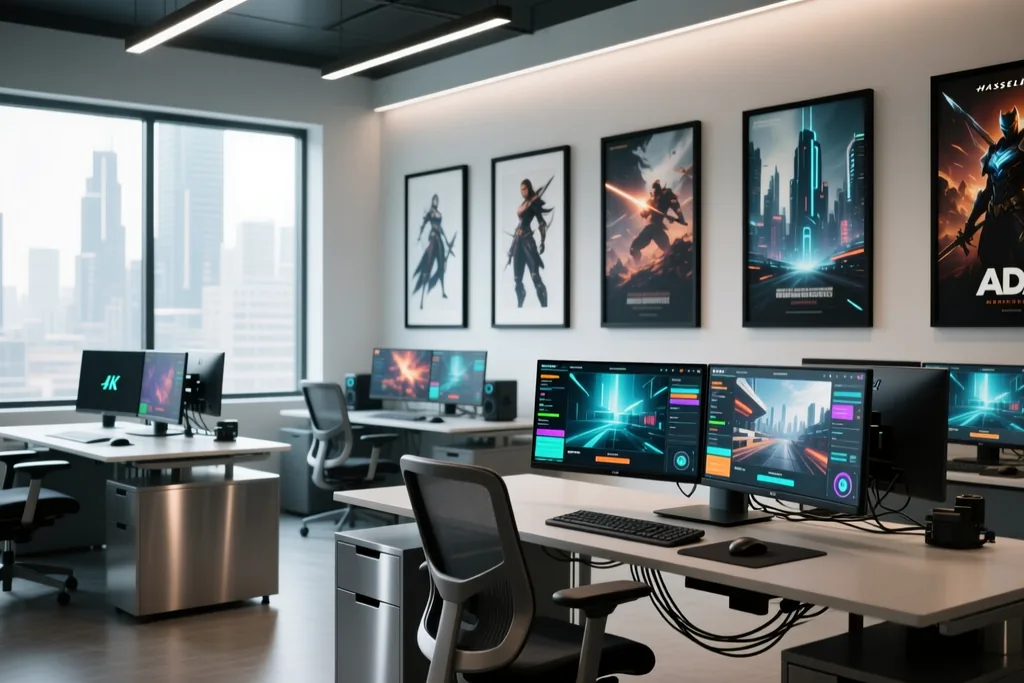
Dytbaat is a game studio and consultancy built around a simple belief: a good game is almost never finished at launch, and reaching its potential takes measurement, patience and honest judgement. We are three industry veterans who design and ship our own casual titles and help other studios improve theirs. This page explains who we are and how we got this way.
Three people, one studio
The studio began as a conversation between three specialists who had spent years in games in very different corners of the craft. One came from analytics, one from player engagement and user experience, the other from marketing and user acquisition. Between us we had shipped and supported games, and we had all watched promising titles fall short for reasons that were fixable.

We built Dytbaat to be small on purpose. Three senior people who each own their discipline can move without the layers a larger studio needs, and they can speak honestly to a client because nobody has to protect a department. Small is not a limitation we settled for; it is the shape that lets the work be direct.
What we do
We work on two fronts. We design, ship and care for our own casual games, which keeps us close to the reality of making and supporting a title. And we consult for other studios across the areas that most often decide whether a game succeeds: audits, monetisation, user acquisition, live operations and analytics.
The two halves feed each other. A lesson learned shipping our own puzzle game becomes advice we can give with confidence, and a problem we solve for a client sharpens how we build our own titles. Neither side is a side project; they are the same practice seen from two angles.
How we think about games
We start from the player's experience and work backwards. What is the player trying to do, what stands in the way, and what would tell them they are succeeding? A game that answers those questions clearly rarely needs to be rescued, and a game that does not is often failing early rather than late.
- Measure before changing anything.
- Respect the player's time above the team's convenience.
- Say honestly when something is working.
- Prefer a small, finished change to a large, half-built one.
- Keep the game's core feeling intact through every fix.
None of these are slogans for us; they are habits that cost us easy answers and save us from expensive mistakes. They are also the reason clients stay, because a studio that tells the truth is easier to trust with a game.
Where we work
The table below sets out the basics of the studio, the way a visitor or a prospective partner would want them. We keep it plain, because the interesting part of a studio is never its address but the way it works.
| Item | Detail | What it means in practice |
|---|---|---|
| Form | A game studio and consultancy | We build and we advise |
| Team | Three senior specialists | Direct, honest, hands-on |
| Base | Copenhagen, Denmark | Remote-friendly by habit |
| Focus | Casual mobile games | Loops, feel and long lives |
Partners and clients
We work with studios of every size, from a two-person indie team with a prototype to a publisher with a portfolio and a problem. What they have in common is a game they believe in and a willingness to look at it honestly. That willingness matters more than their budget, because it is the only thing that makes advice useful.
We offer a free initial read to studios whose game is not performing as hoped. It is a short, honest conversation, not a pitch, and it usually ends with a clear view of where the largest opportunities are. If the answer is that there is nothing worth paying for yet, we will say that too.
How we got here
We did not set out to run a consultancy. We set out to make our own games, and the consulting grew out of that work. Clients began asking how we had solved a particular problem, then asking us to solve a similar one for them, and slowly the two halves of the studio settled into the shape they have today. Nothing about it was planned from a whiteboard.
Working this way keeps us honest. We advise from projects we have actually run, not from theory, and we keep building our own titles so that the advice never drifts away from the reality of making something people will play. A studio that only advises slowly forgets what the work costs, and a studio that only builds loses the outside view. We try to keep both.
Why a studio like this exists
We started Dytbaat because we kept meeting good games that were stuck, and good teams that could not see why. Our belief is that most of those games are closer to success than their makers think, and that a small amount of honest, evidence-based work can move them further than a large amount of guesswork. That is the wager the studio is built on, and it is the reason we come to work.
Read next
Our approach: data, play and iteration
Why we measure before we change anything and how iteration shapes our work.
The tools behind our games and analysis
The everyday software and methods our designers, engineers and analysts rely on.
Case notes: what we learn from every release
How we record decisions, results and lessons after each game and project.